

AGRICULTURAL PRODUCTION
And the seed… It is the beginning of everything.
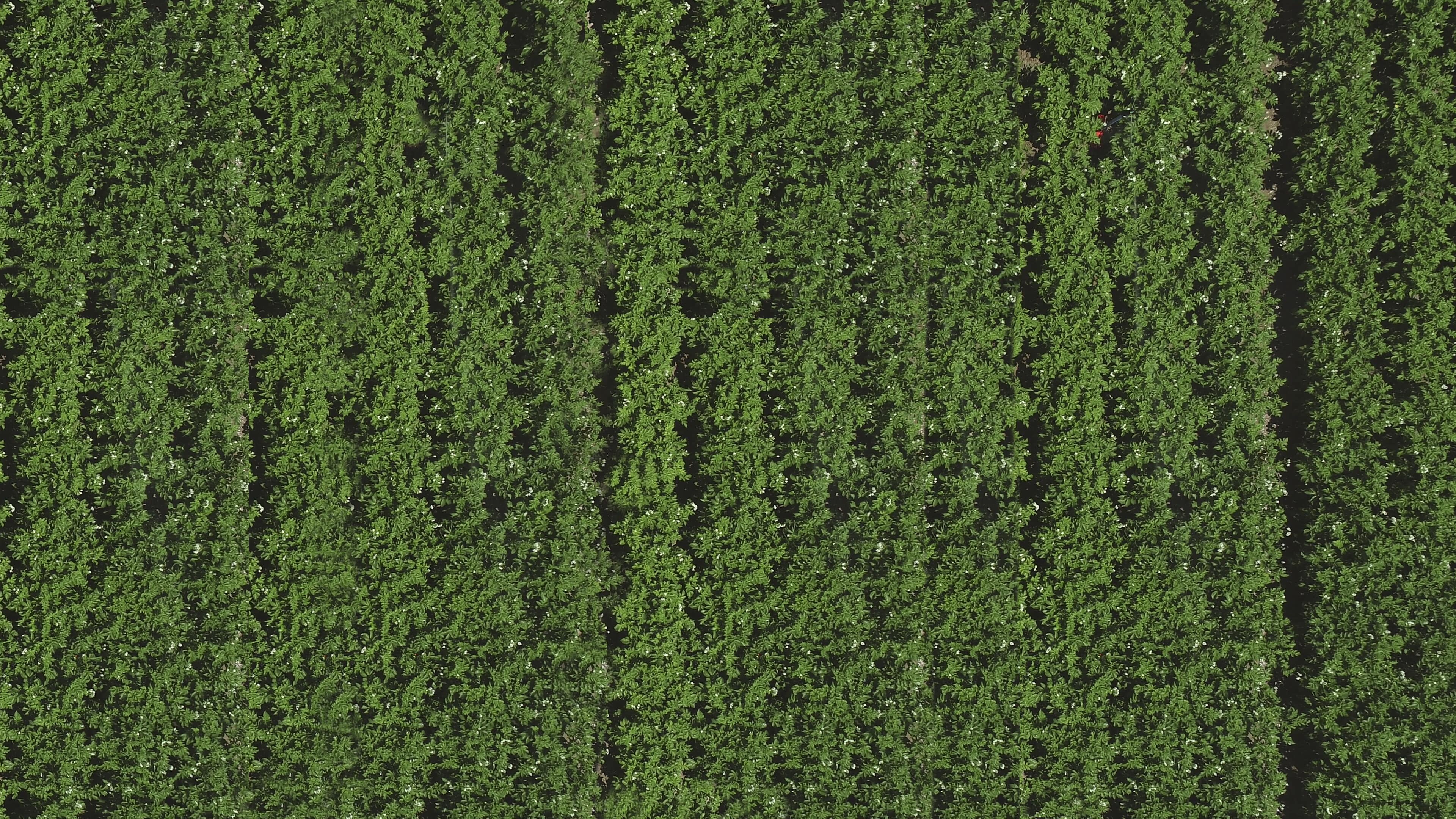
Good raw material means good product.
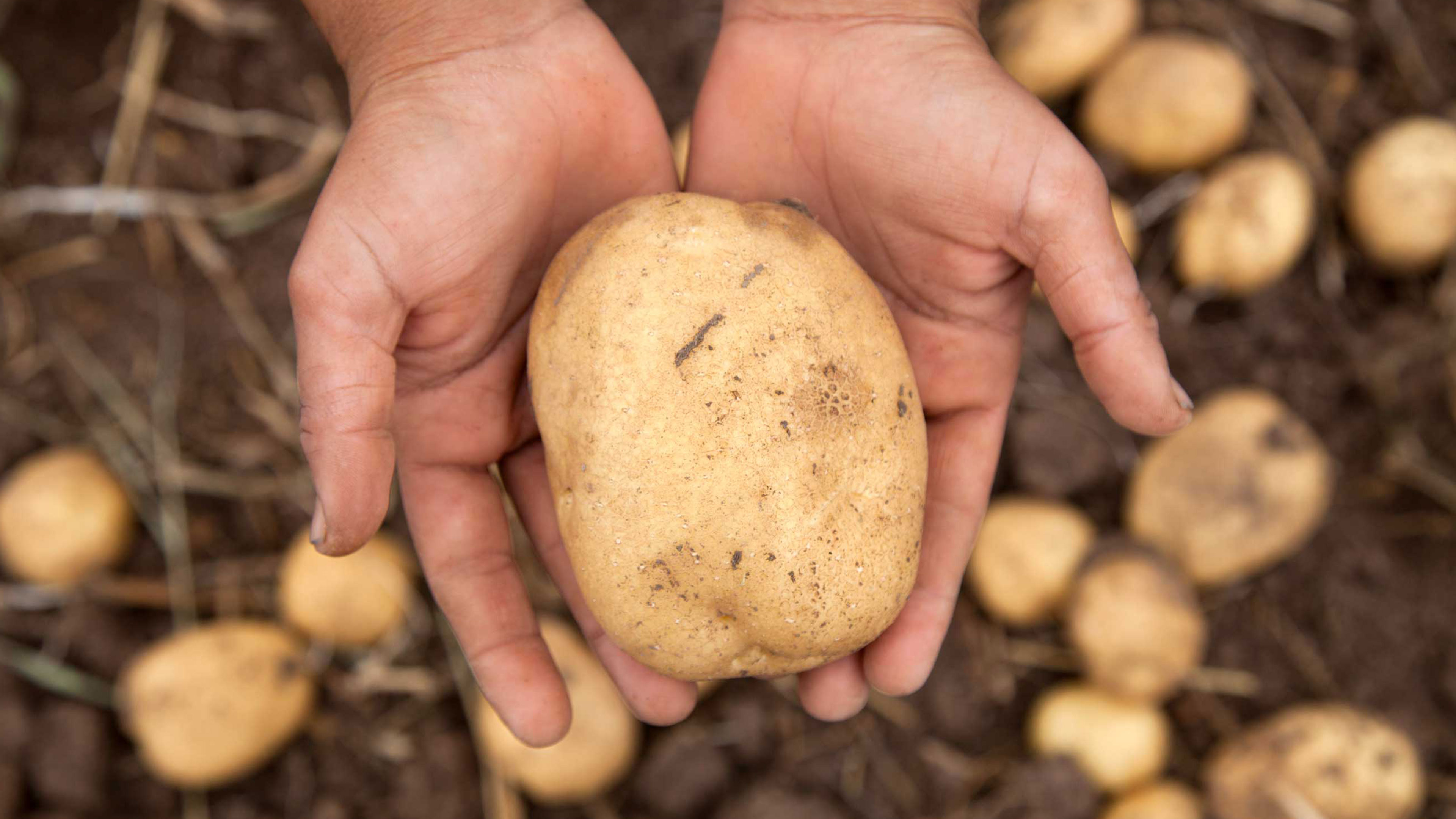
“Loved flavors are crafted with quality ingredients.”
“From seed to fork, we are there from the very beginning! With the quality system we have developed, we ensure full traceability. Through our correct farming practices, innovative solutions in agricultural technology, and cultivation expertise, we harvest the highest-quality crops of the season.”
First and foremost, choosing for health, followed by gastronomic and taste preferences, is always satisfying. You can visit our blog to explore scientific research on this topic.
- For frying, varieties with high dry matter and low reducing sugar content are preferred. Varieties with low dry matter absorb too much oil during frying and usually do not provide the crispiness desired in fried products. Varieties with high sugar content can form acrylamide when fried, which is often considered undesirable and not recommended for consumption.
Recommended varieties: Bahar, Doruk, Kaya, Kutup, Volkan, Alegria, Russet Burbank, Sephody - For boiling, varieties with low dry matter are preferred. Low dry matter varieties do not crack or disintegrate when boiled, retaining most of their nutritional value and minimizing nutrient loss into the cooking water. They also break apart pleasantly in the mouth, providing a pleasing texture.
Recommended varieties: İlkmor, Zirve, Borwina - For baking, high dry matter varieties are generally preferred. Baked potatoes lose a significant amount of water, and high dry matter varieties typically develop a floury, melt-in-the-mouth texture. However, depending on your taste and baking habits, you may choose either high or low dry matter varieties.
Recommended varieties: İlkmor, Doruk, Russet Burbank
It is not recommended to choose greened or sprouted potatoes. The substance that causes greening in potatoes is solanine, which has toxic effects (although poisoning cases are generally rare unless consumed in large amounts). Sprouted potatoes direct their energy towards growing the sprouts, which can reduce the nutritional value of the tuber.
Tuber shape, skin appearance, skin color, and flesh color are visual variety characteristics; they do not directly indicate nutritional value. However, some plant disease symptoms can be visually detected, and reliable producers do not place potatoes showing such defects on the market.
However, with climate change, agricultural conditions are also shifting, which is why breeding plays an important role in the future of farming. (For detailed information, you can visit our R&D page.)
In Turkey, in coastal regions known as “early season” areas, planting takes place between December and February, and harvest occurs between May and June. The potato variety grown in these regions must be carefully selected, taking into account the soil and climate conditions as well as potential diseases.
In the Central Anatolia region, known as the main production area, planting occurs in April–May, and harvest takes place in September–October.
The potato plant is very sensitive, so cultural practices must be carefully managed. Seed selection is extremely important, and certified seed potatoes should be used.
In general, all agricultural production should treat the soil carefully to avoid degradation. For table potatoes, crop rotation should be done every 3 years, and for seed potatoes, every 5 years.
First and foremost, certified seed must be used. Since potatoes are a vegetative organ with about 80% water content, they can carry viruses, bacterial, and fungal diseases from year to year. The disease risks of uncertified seeds are unknown. Using uncertified seeds can result in lower yields, financial losses, and, most importantly, the risk of quarantinable diseases spreading to our soils.
Another important factor is selecting a variety suitable for your soil and climate conditions, as well as for its intended use (table potatoes, chips, finger potatoes, etc.).
That’s why we say: “The most suitable variety, the most reliable seed!”
Since the potato plant has a shallow effective root depth, it requires frequent and abundant watering. The climate in our country necessitates the use of irrigation systems for potato cultivation. However, by observing changing climate conditions and selecting varieties suitable for the region, water consumption and irrigation costs can be minimized. On the other hand, excessive irrigation can lead to fungal diseases in the field.
Common Mistakes in Potato Cultivation:
- Choosing the wrong variety
- Selecting unsuitable soil
- Planting cut or divided seed tubers
- Failing to plant at the right time
- Planting in overly wet or dry soil that is not at the optimal temperature
- Rotting of potatoes due to excessive irrigation
- Incorrect, insufficient, or excessive fertilization
- Performing cultural practices (e.g., hilling) at the wrong time
- Harvesting before tubers mature or leaving them too long in the soil after maturity
- Causing mechanical damage to tubers during harvest
What Do We Owe Our Quality To?
We produce only potatoes. For 25 years, we have focused all our energy exclusively on potatoes.
- We use certified seed potatoes.
- We choose varieties suitable for Turkey and the specific conditions of the planting region.
- We care about the soil and the environment. We know that soil quality is our future.
- We never compromise on crop quality to achieve higher yields.
- We update our agricultural expertise through scientific and technical advancements.
- Our agricultural production plan is prepared one year before planting.
- The entire process is carried out entirely under our control, with our own team.
Our Capacity